Equipment
Using a Slider for Reveal Shots
A slider produces the smoothest movement available to a small setup. It is also the tool most often bought and least often used well.
In this guide
What a slider is good at
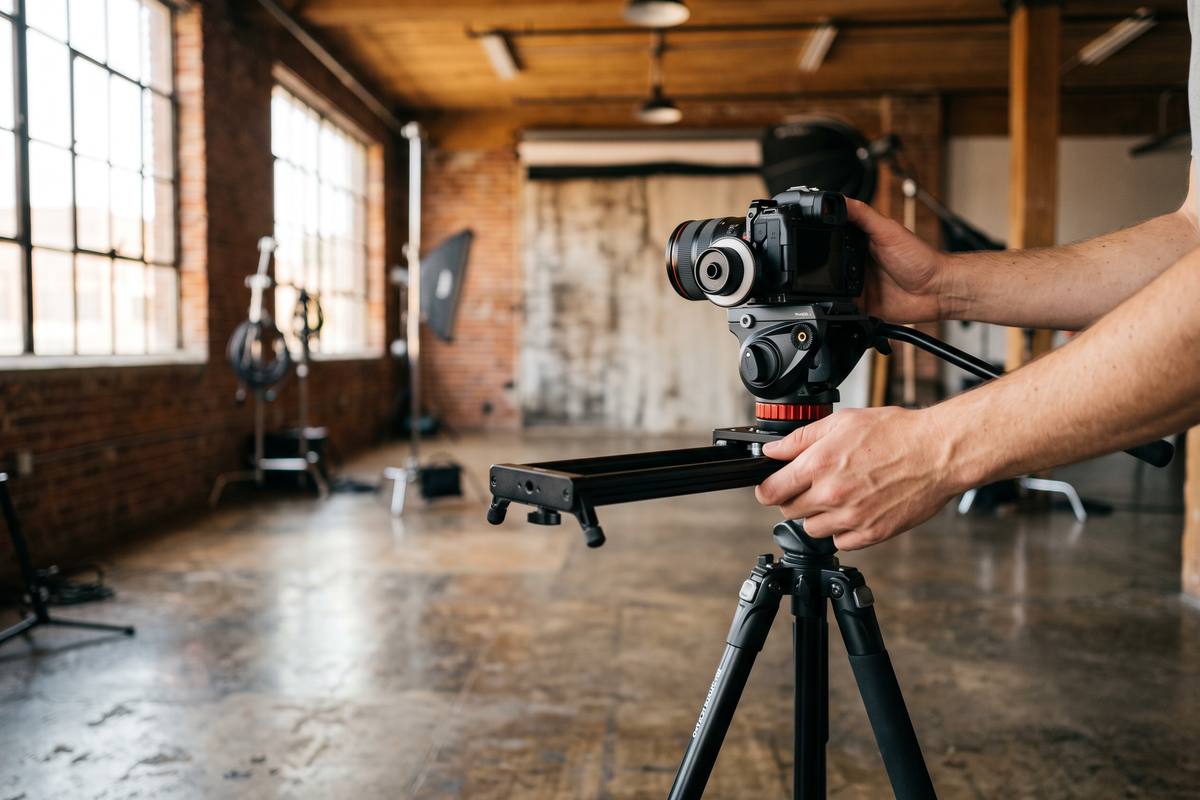
A slider moves the camera along a fixed line. That constraint is its advantage: the movement is perfectly smooth, perfectly repeatable, and the framing stays consistent, which makes it ideal for product and tabletop work.
It is less useful for following people or covering distance, because the rail has to be placed and levelled before every shot. A slider is a tool for planned, repeatable shots rather than spontaneous ones.
Reveal shots
The classic use is the reveal: the camera begins behind or beside an obstruction and moves to uncover the subject. For a product, that might be starting behind a folded card; for an interior, starting beside a doorway.
Keep the reveal short and end the move once the subject is fully visible. Reveals that continue moving after the subject appears lose the effect and force the viewer to keep tracking the frame.
- Start with the subject hidden by something in the foreground
- Move slowly enough that the reveal feels deliberate
- End the move when the subject is fully visible
- Hold the final frame for at least two seconds
Setting up so the shot is repeatable
Level the rail first, then set the camera height, then mark the start and end positions with tape or a note. This order prevents the common problem of a level rail at the wrong height with a beautiful move that reveals nothing.
Keep the rail as close to the subject as the framing allows, so the movement reads as a change in perspective rather than a simple sideways shift.
Alternatives when you do not have a slider
A smooth table, a skateboard, a trolley or even a folded cloth under a small tripod can produce a serviceable short move. The physics are identical: a straight path and a steady hand.
For most short-form video, a single well-executed slider shot in a sequence is enough. Two or three slider moves in a thirty-second video reads as a technique display rather than storytelling.
Key takeaways
- A slider is for planned, repeatable shots, not spontaneous coverage.
- End the reveal when the subject is fully visible and hold the frame.
- Level the rail, then set the height, then mark start and end positions.
- One slider move per short video is usually enough.
FrameRate Journal editorial teamWritten by camera operators and reviewed by editors, because a move only works if it survives the cut.
How long should the rail be?
Long enough for the movement you need and short enough to carry. A short rail used close to the subject produces more visible perspective change than a long rail used far away.
Do I need a motorised slider?
No. Motorised sliders help with very slow, very repeatable moves, but manual movement is smoother than most people expect once the rail is level.
Can I use a slider for vertical movement?
Some models allow a vertical configuration. It requires a stronger support and careful balancing, and it is worth it mainly for tall products.