Technique
Pan, Tilt and Track: Core Camera Moves
Three moves carry almost every short-form video. Learn them properly and the rest are variations on a theme.
The pan
A pan rotates the camera horizontally, connecting two points in the same space. It is the simplest way to show a relationship between a person and their surroundings, or to move from a detail to a wider view.
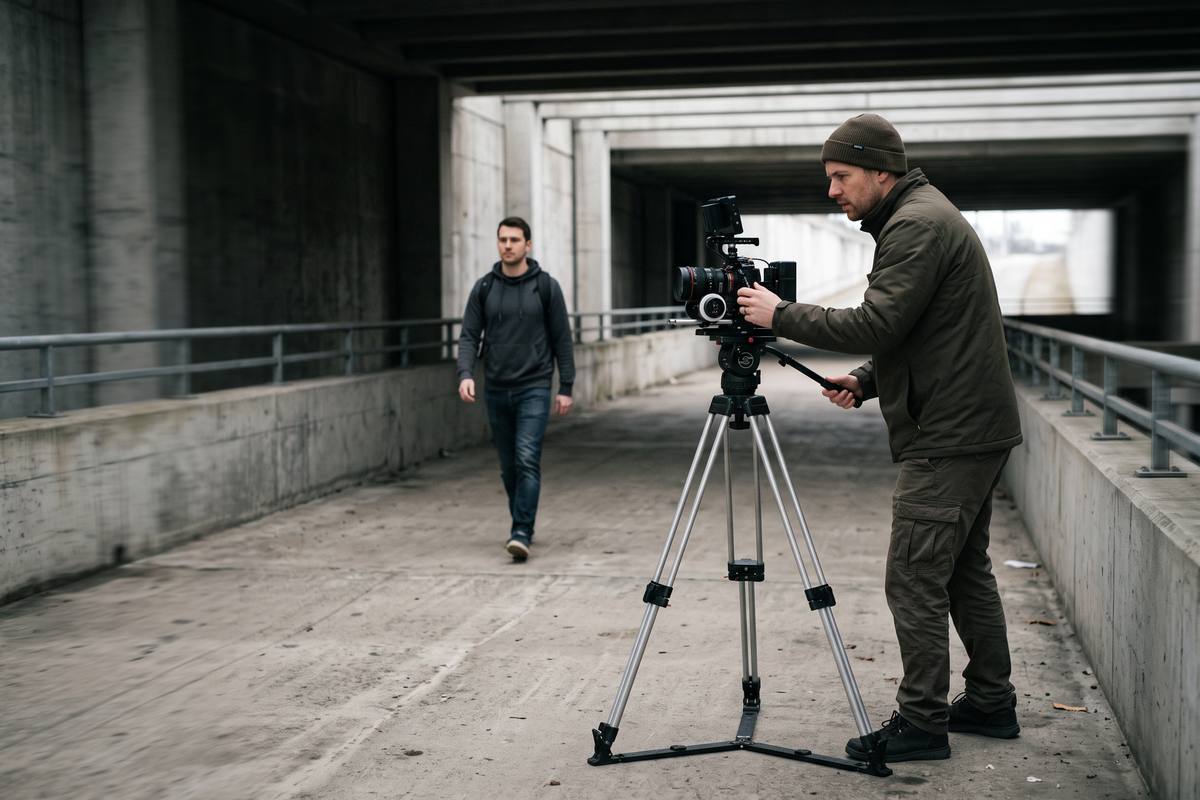
Execute it on a tripod with a fluid head wherever possible, because the tripod's resistance keeps the speed even. Handheld pans work only if you turn from the waist with the elbows braced, and even then they are harder to keep level.
- Decide the start frame and the end frame before recording
- Turn from the waist, not from the wrists
- Keep the speed constant through the whole move
- Hold the end frame for two seconds before stopping
The tilt
A tilt moves the camera vertically and is best used when the subject is tall or when scale matters: a building, a plant, a person standing up, a product on a shelf. It reveals height in a way a static frame cannot.
Tilt slowly. Vertical movement is more disorienting than horizontal movement, and viewers notice an uneven speed immediately. If the move feels too slow while you are recording it, it is usually about right.
The track
A track moves the camera through space while keeping the subject at a consistent size. It is the most engaging of the three because it changes the relationship between the subject and the background, which is why it is worth the extra effort.
Walking backwards is harder than walking forwards. Walk forward with the subject moving away from you, or use a gimbal, or shoot the track from a moving support such as a trolley, a bicycle or a car window when the location allows.
- Keep the subject at a constant size in the frame
- Use short steps and soft knees to absorb movement
- Plan the path before recording and check it for obstacles
- Stop cleanly rather than drifting to a halt
Judging whether the move worked
Watch the shot once at normal speed and once with the sound off. If the move draws attention to itself rather than to the subject, it is too fast, too long, or unnecessary.
Then watch it in the edit, cut against the shots before and after. A move that works alone can still fail in sequence if it duplicates information the previous shot already gave the viewer.
Key takeaways
- Define the start and end frame of every move before recording.
- Use a tripod for pans and tilts; handheld movement needs braced elbows and waist turns.
- Track shots work best when the subject keeps a constant size in frame.
- Judge movement in the edit, against the shots around it.
FrameRate Journal editorial teamWritten by camera operators and reviewed by editors, because a move only works if it survives the cut.
How fast should a pan be?
Slow enough that the viewer can read the frame while it moves. A useful reference is five to eight seconds to cross the frame.
Can I pan with a phone in hand?
Yes, if you brace both elbows and turn from the waist, but expect less consistency than with a tripod.
Should the move end on the subject?
Usually, yes. Ending on the subject gives the edit a clean point to cut from and gives the viewer a moment to settle.