About FrameRate Journal

A journal about how shots are made, not only how they are filmed

FrameRate Journal writes about camera movement for short-form video. Every piece is written by operators and reviewed by editors, because a move only matters if it survives the cut.
Editorial approach

We start from the cut, not from the camera

Most technique writing starts with equipment and works forwards. We work backwards: a shot is only worth writing about if it earns its place in a finished sequence, so every guide begins with what the move has to achieve and ends with how to judge whether it did.

The journal is written by camera operators and reviewed by editors. Both have to agree before a technique is published, which is why the pieces are shorter and more specific than a general filmmaking course.

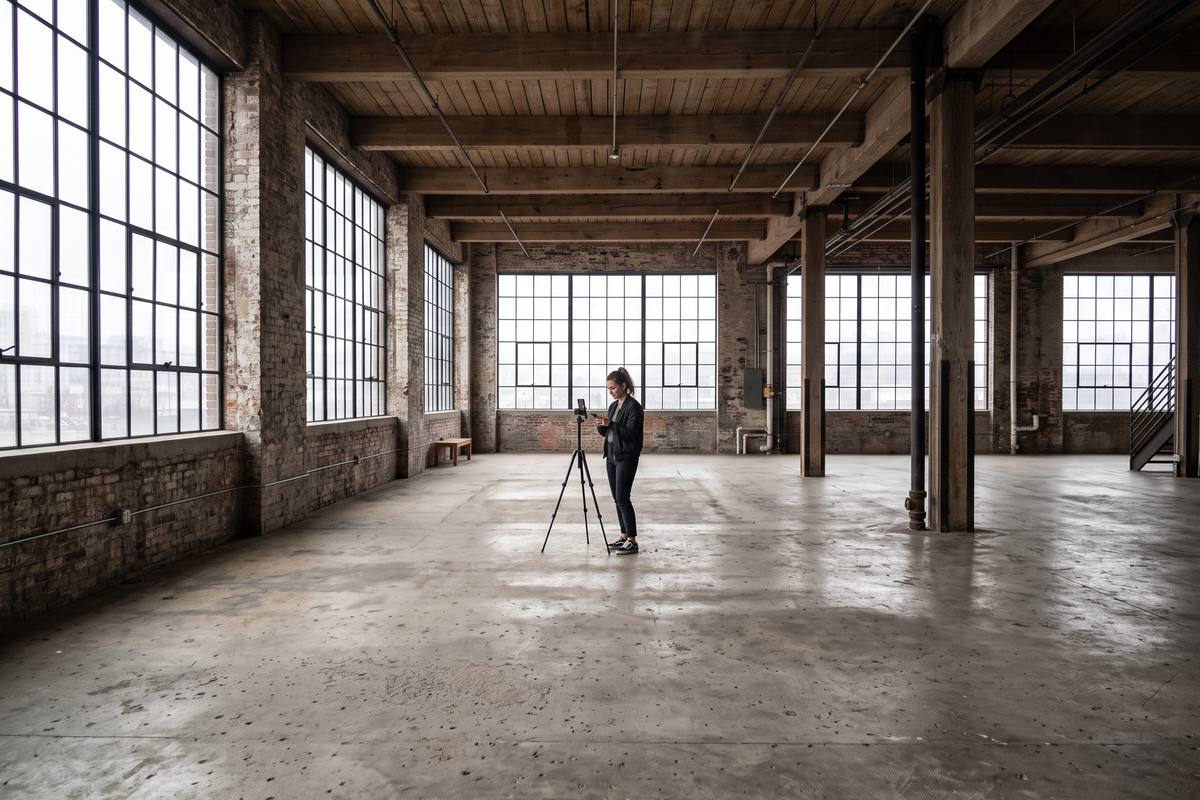
Creator preparing a shot in a wide empty loft space

Standards

Three standards every piece meets

They are the reason the journal covers a small number of techniques in depth rather than a large number superficially.

Editorial purpose first

Every technique is introduced with the problem it solves. A move without a purpose is described as decoration, not as a technique.

Executable alone

Techniques must be possible for a single operator with ordinary equipment, because that is how most short-form video is made.

Reviewed in the edit

Each technique is checked in a finished sequence, not only on location, to confirm it survives the cut.

Editorial standards

How a piece is written and reviewed

  1. Find the problem

    Pieces begin with a problem that appears repeatedly in real footage: a pan that drifts, a reveal that overruns, movement that adds nothing.

  2. Film the solution

    The technique is filmed in at least two locations, including one where conditions are not ideal.

  3. Review in the edit

    An editor checks the footage in a sequence to confirm the movement reads as intended when cut against other shots.

  4. Write the judgement criteria

    Every piece ends with how to judge the result, because technique without evaluation criteria is just a description.

Editorial desk

Who writes the journal

Pieces are credited by role because each is reviewed collectively by the operator and the editor before publication.

Camera operator

Movement technique pieces

Films and writes the technique pieces, including the execution notes and common mistakes.

Editor

Sequence and judgement pieces

Reviews every move in the edit and writes the sections on judging whether movement works.

Equipment reviewer

Tool-specific pieces

Tests support and movement equipment and reports honestly on where each tool does not help.

Contact

Disagree with something we wrote?

Send the shot and the reasoning. We publish corrections when they are right, and the arguments when they are interesting.