Editorial
Movement That Serves the Story
Movement is a sentence, not punctuation. Used constantly it stops meaning anything; used once, it can carry the whole video.
In this guide
The four jobs movement can do
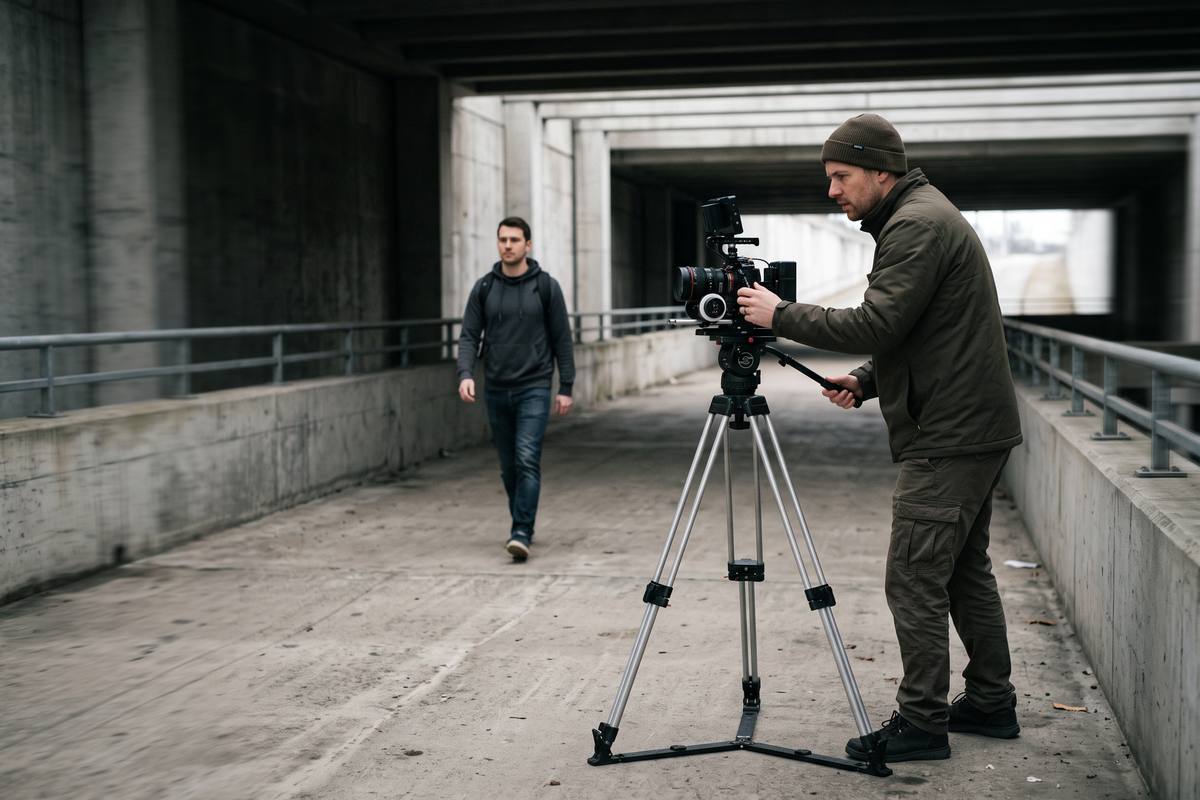
Movement earns its place when it does one of four things: it reveals information the viewer did not have, it follows action that is already happening, it connects two elements in a space, or it changes the emotional distance to the subject.
If a shot does none of those, the move is decoration. Decoration is not forbidden, but it should be added after the story works, and removed first when the edit needs to be shorter.
- Reveal: showing scale, context or a hidden element
- Follow: staying with action that travels
- Connect: linking a person to an object or a place
- Approach: changing intimacy without cutting
Static shots make movement stronger
Movement is only noticeable relative to stillness. A video where every shot moves gives the viewer no reference point, so the movement reads as noise. A video with three static shots and one deliberate move makes that move the moment the viewer remembers.
Build a sequence of static framings first, then decide which single shot deserves movement and what that movement should achieve.
Judging a move in the edit
Watch the sequence with the sound off. If you notice the camera rather than the subject, the move is either too fast or unnecessary. Then watch it again at normal speed and see whether your attention stays where you intended it to.
A useful test is to remove the move and cut the same content statically. If the video is equally clear without it, keep the static version and save the movement for a shot that needs it.
Planning movement on the shot list
Write the intended move next to the shot on your list, including its start and end frames. Shots with a written move are filmed deliberately; shots without one are filmed by instinct, and instinct produces the same move over and over.
At the end of a shoot, count how many shots moved. If most of them did, choose one to refilm statically and keep the rest. That single decision usually improves the finished edit more than any additional equipment could.
Key takeaways
- Movement should reveal, follow, connect or change intimacy.
- Static shots are the reference that makes movement readable.
- Test each move by watching the sequence with the sound off.
- Write the intended move and its start and end frames on the shot list.
FrameRate Journal editorial teamWritten by camera operators and reviewed by editors, because a move only works if it survives the cut.
Is a static video boring?
Only if nothing else changes. Framing, subject position, light and sound all create variation without moving the camera.
Should the opening shot move?
Usually not. A stable first frame gives the viewer a moment to decide to watch, and movement is more effective once attention is established.
How do I know which shot deserves movement?
The one where movement adds information: a reveal, a connection or a change of distance. Everything else can hold still.